2026Gropius House Visitor Center
The Gropius House Competition invited architects and designers to propose a new visitor center for the Walter Gropius House in Lincoln, Massachusetts, one of the most significant surviving examples of Bauhaus architecture in the United States. Organized to honor Gropius’s legacy as founder of the Bauhaus and advocate for the integration of architecture, technology, and everyday life, the competition seeks contemporary interventions that respectfully engage the historic site while addressing the practical needs of modern visitors. Entrants are encouraged to explore themes central to Gropius’s work, including innovation, industrial production, environmental sensitivity, and the relationship between architecture and landscape, while creating a thoughtful and welcoming experience for the public.
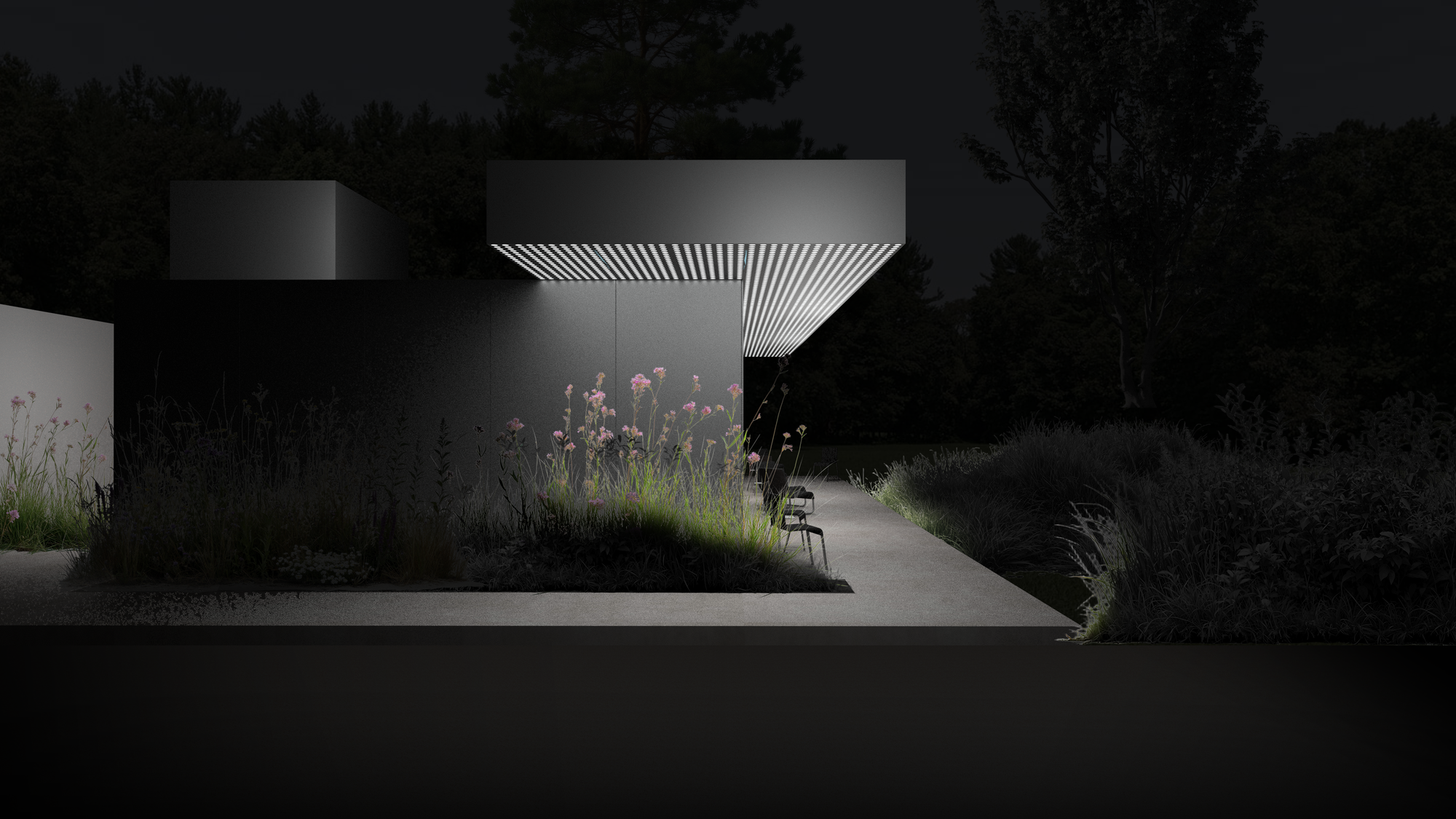
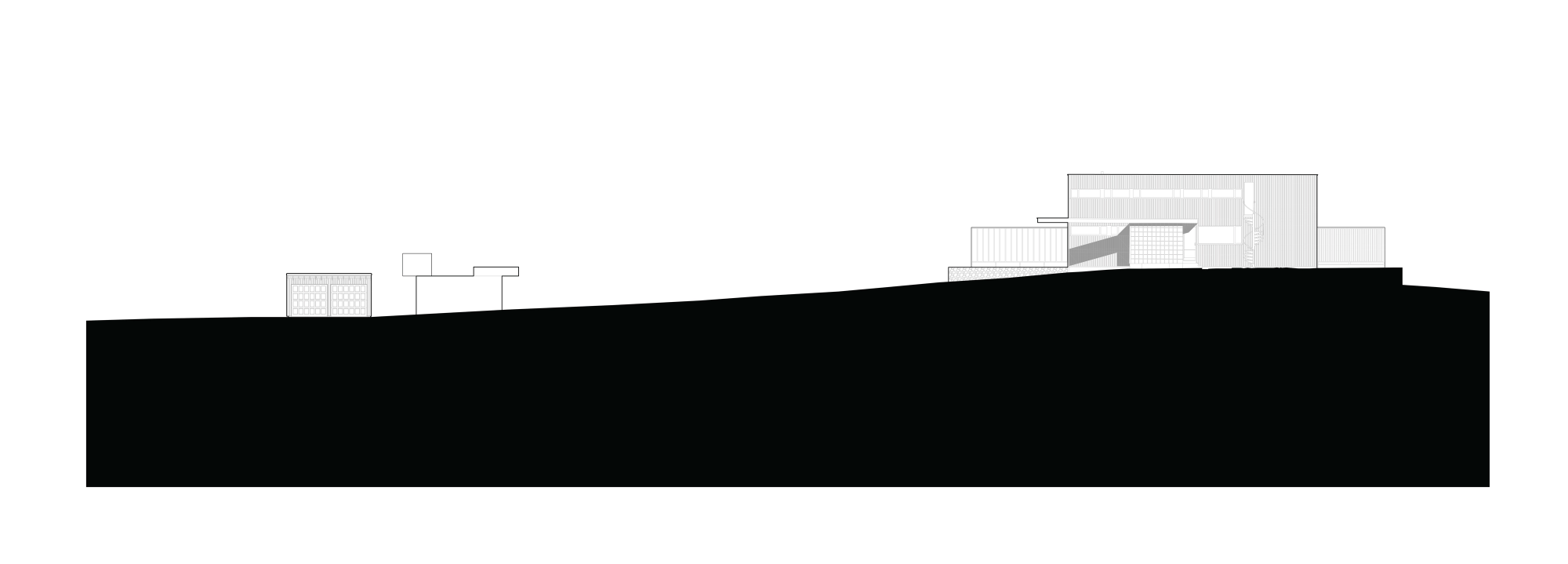
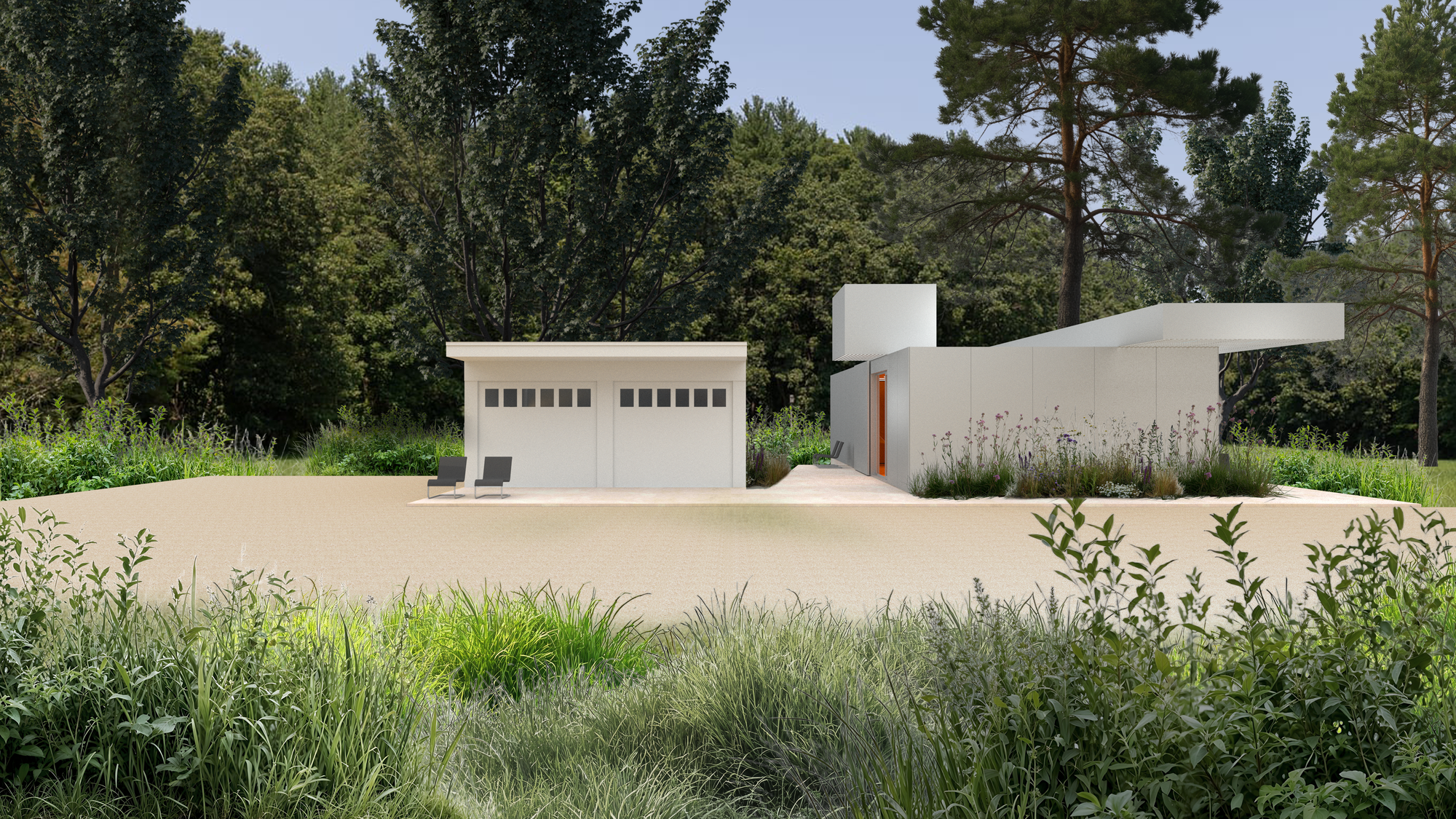
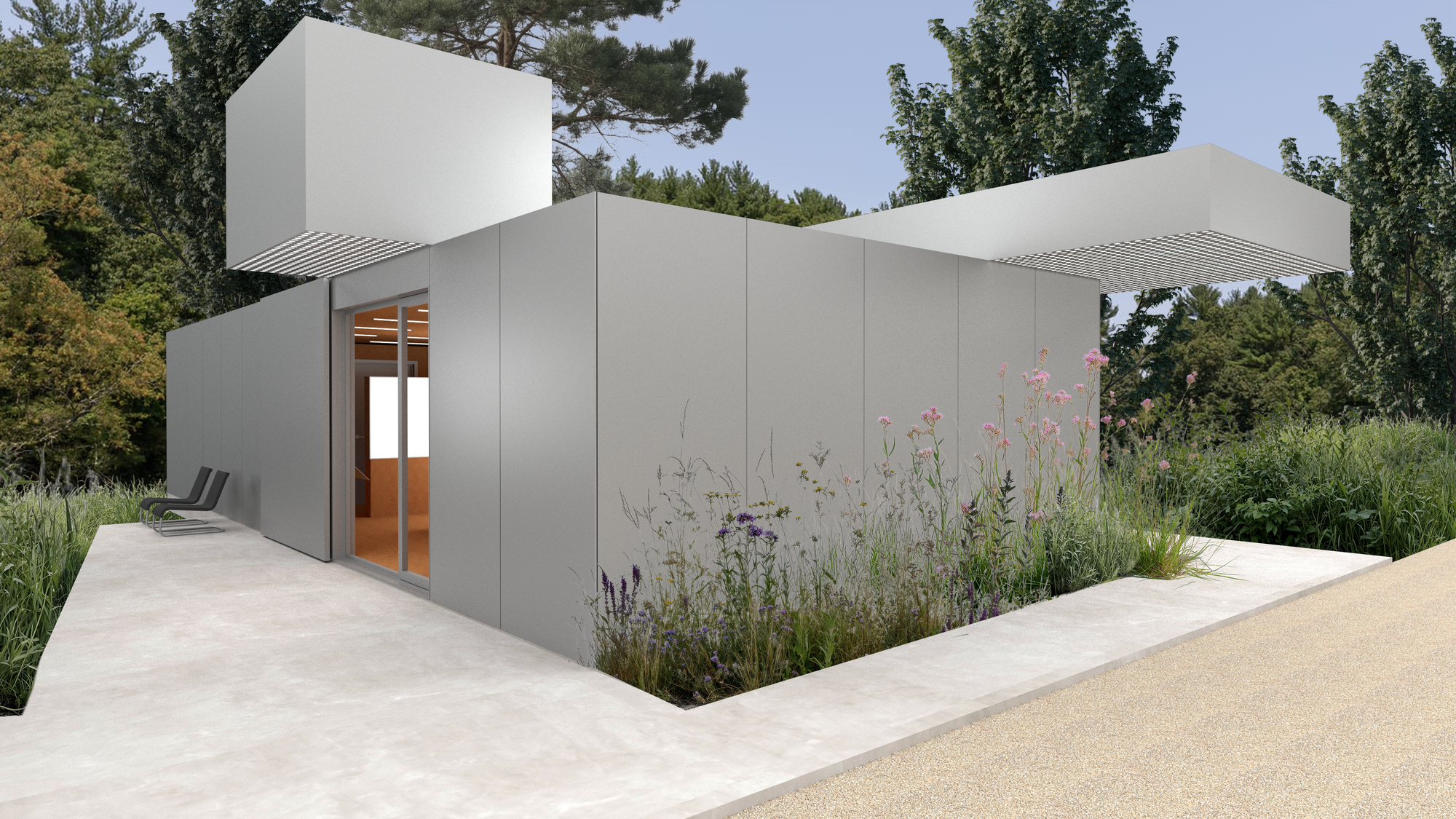
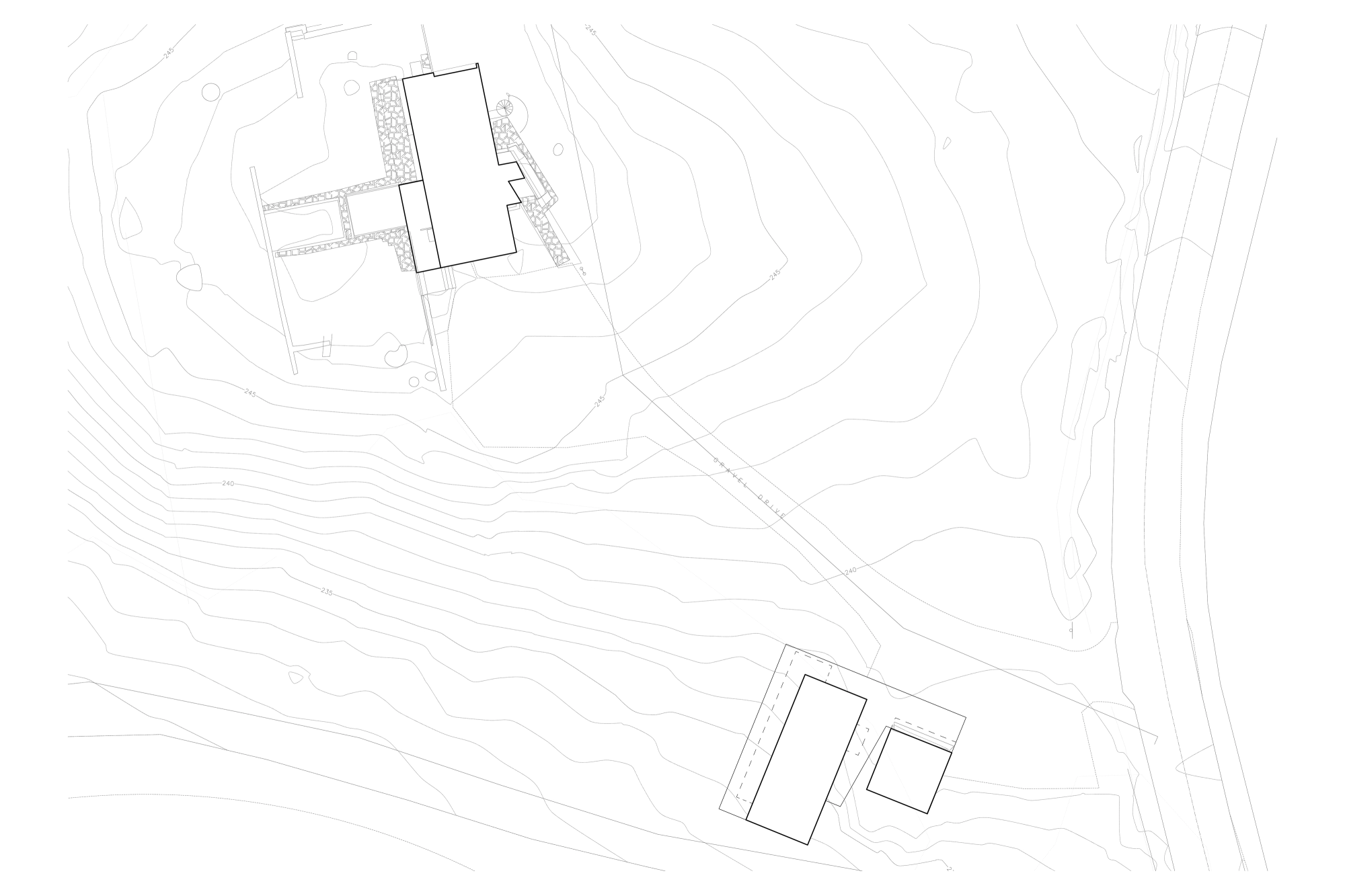
The submitted proposal responds to this brief by balancing historic preservation with forward-looking architectural expression. The design restores the existing garage to its original condition and transforms it into an educational exhibition space focused on Gropius’s relationship to automotive and industrial design, potentially including a period automobile associated with the household. Adjacent to the garage, the proposal introduces a modest new visitor center whose industrial stainless steel exterior contrasts with warm cork-lined interiors and sustainably integrated systems such as rainwater collection for restroom use. Inspired by Gropius’s embrace of technology, craftsmanship, and humane modernism, the project combines exhibition spaces, visitor amenities, and landscaped native gardens to create an experience that both honors the historical significance of the site and reinterprets Bauhaus ideals for contemporary audiences.
Project Narrative:
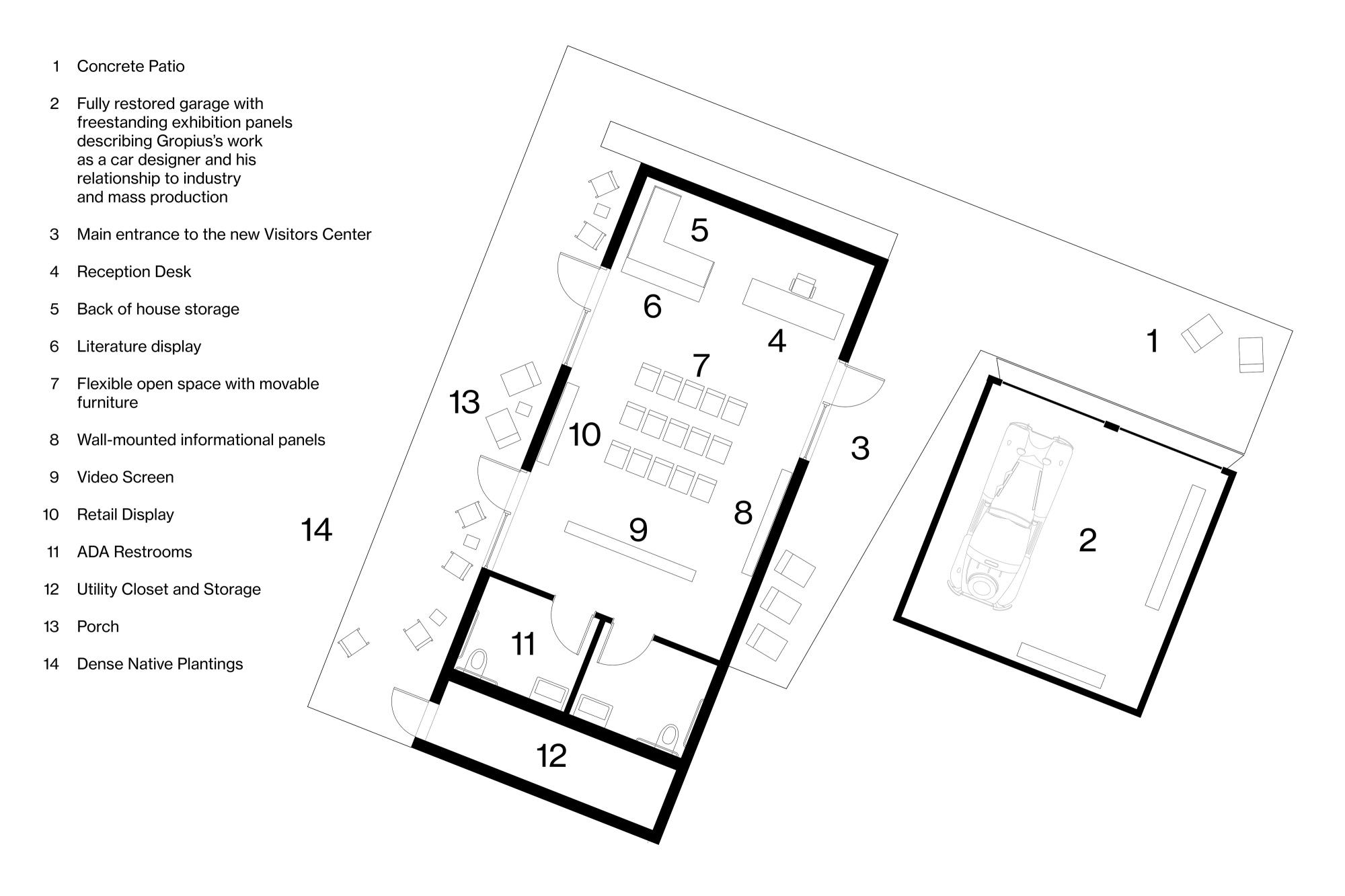
Central to this concept is the goal of preserving the site as an educational tool for future generations while creating a pleasant space to welcome visitors to the house. Our proposal recommends that the garage be faithfully restored to its original state. It would be ideal to determine what type of car was used by the Gropius household and to obtain the same model, or a similar one, to be permanently displayed in the garage. We also propose using the garage as a small exhibition space to tell the story of Gropius’s experience as a car designer for the Adler company, as well as to inform visitors about the relationship between his work and industry, technology, and mass production.
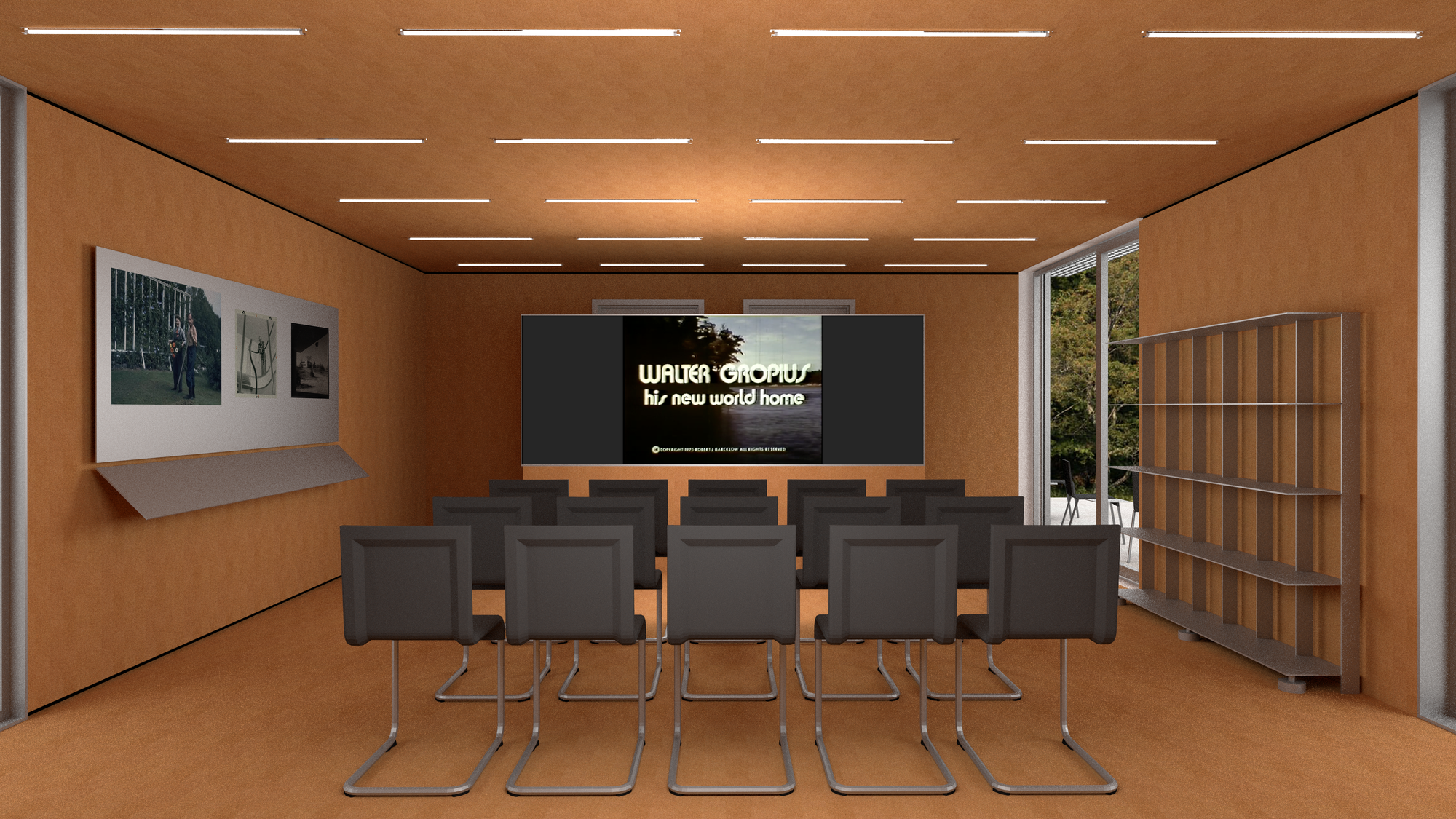
The lesson of how Gropius embraced technology and manufacturing while adapting them to a humane domestic environment and integrating them with a pastoral natural setting is the creative driving force behind the design of a new visitor center adjacent to the existing garage. Similar in scale yet contrasting in materiality, this new space serves as a modest but visually impactful building. It provides areas for greeting and hosting visitors, presenting exhibitions and films, offering opportunities to purchase gifts, and allowing visitors to relax, enjoy the surroundings, or use the restrooms. The restrooms are intrinsically linked to the form of the building, as the roof functions as a rainwater collector that channels water to a storage tank and supplies the toilet systems.
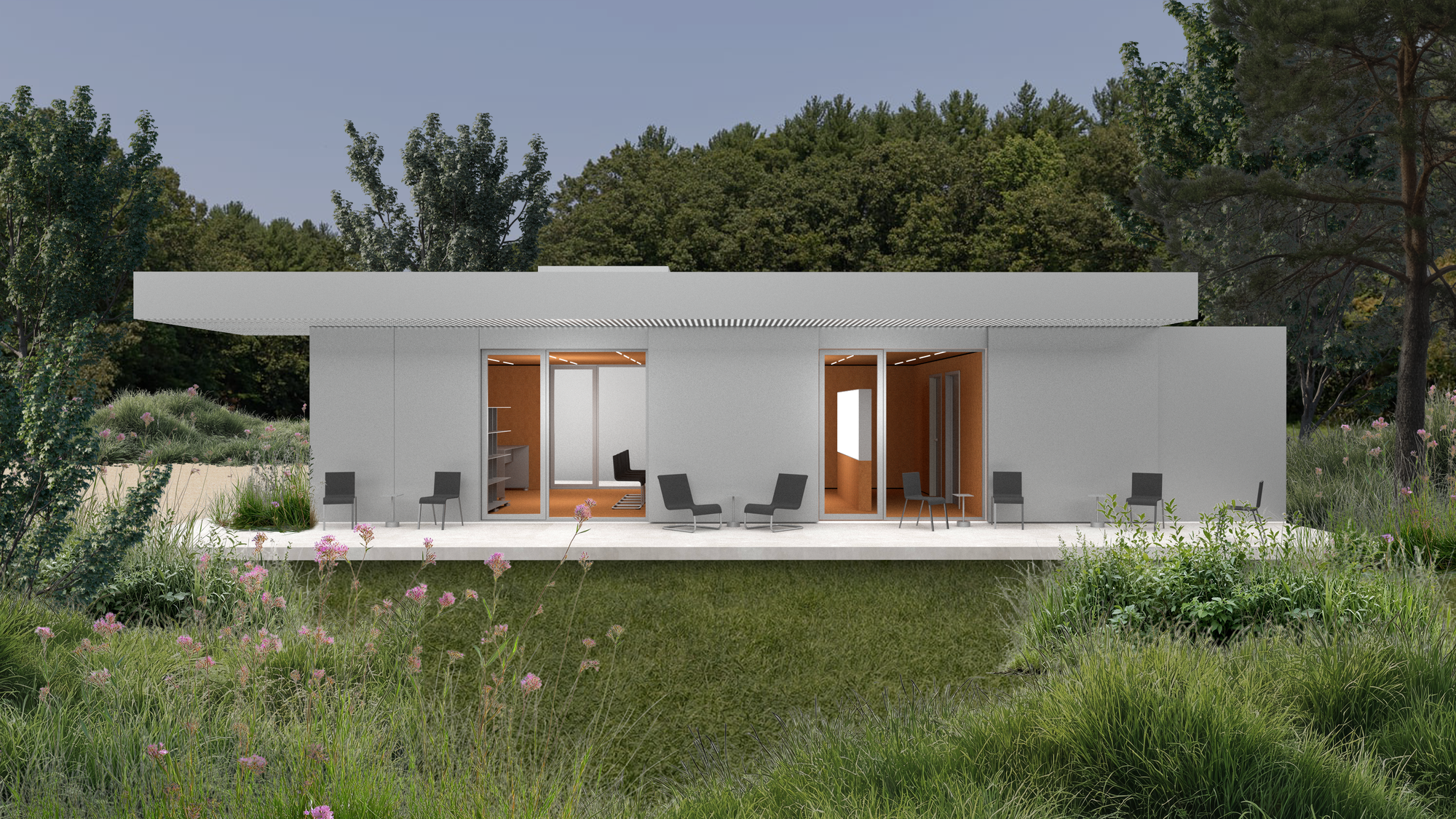
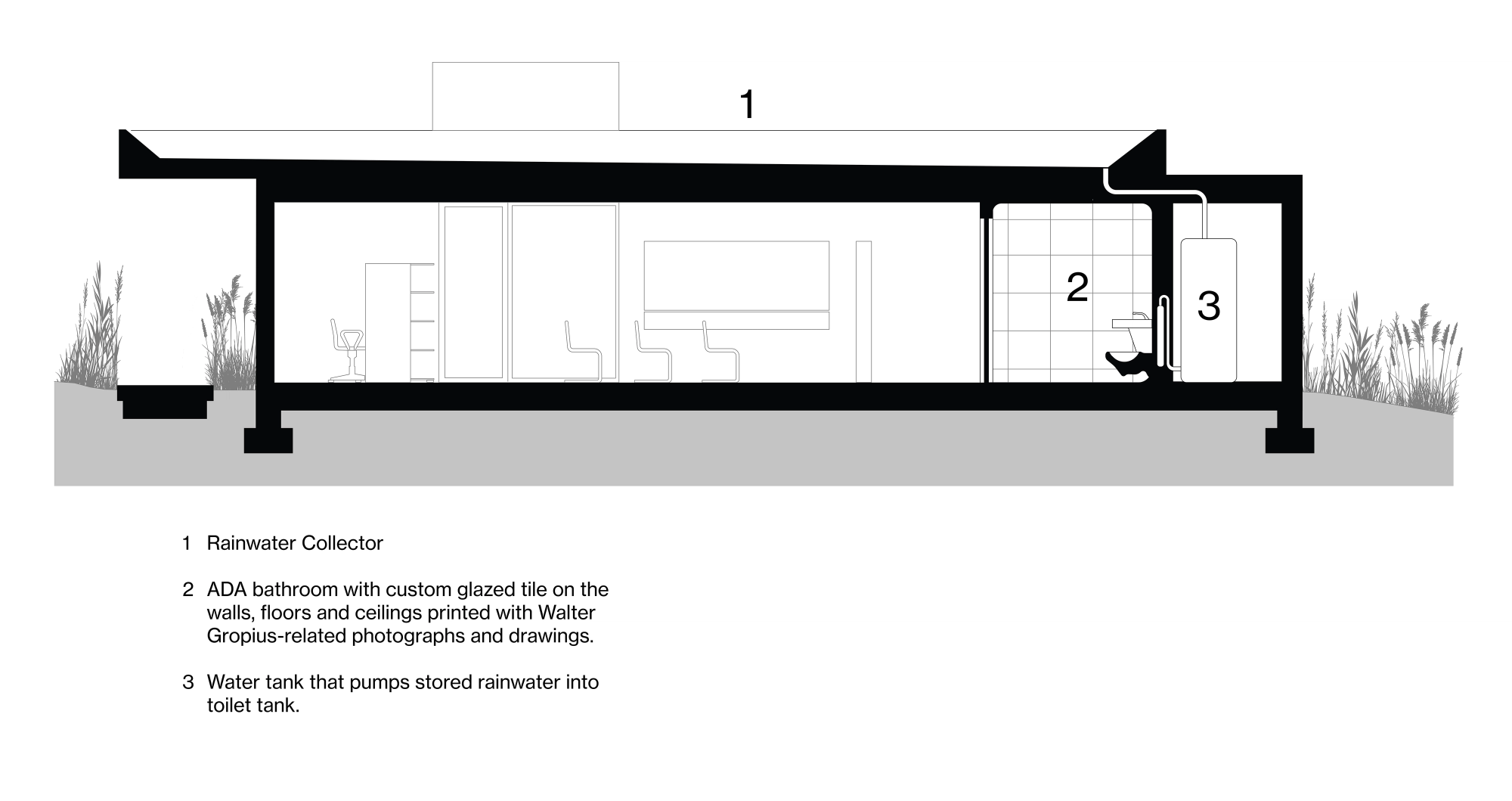
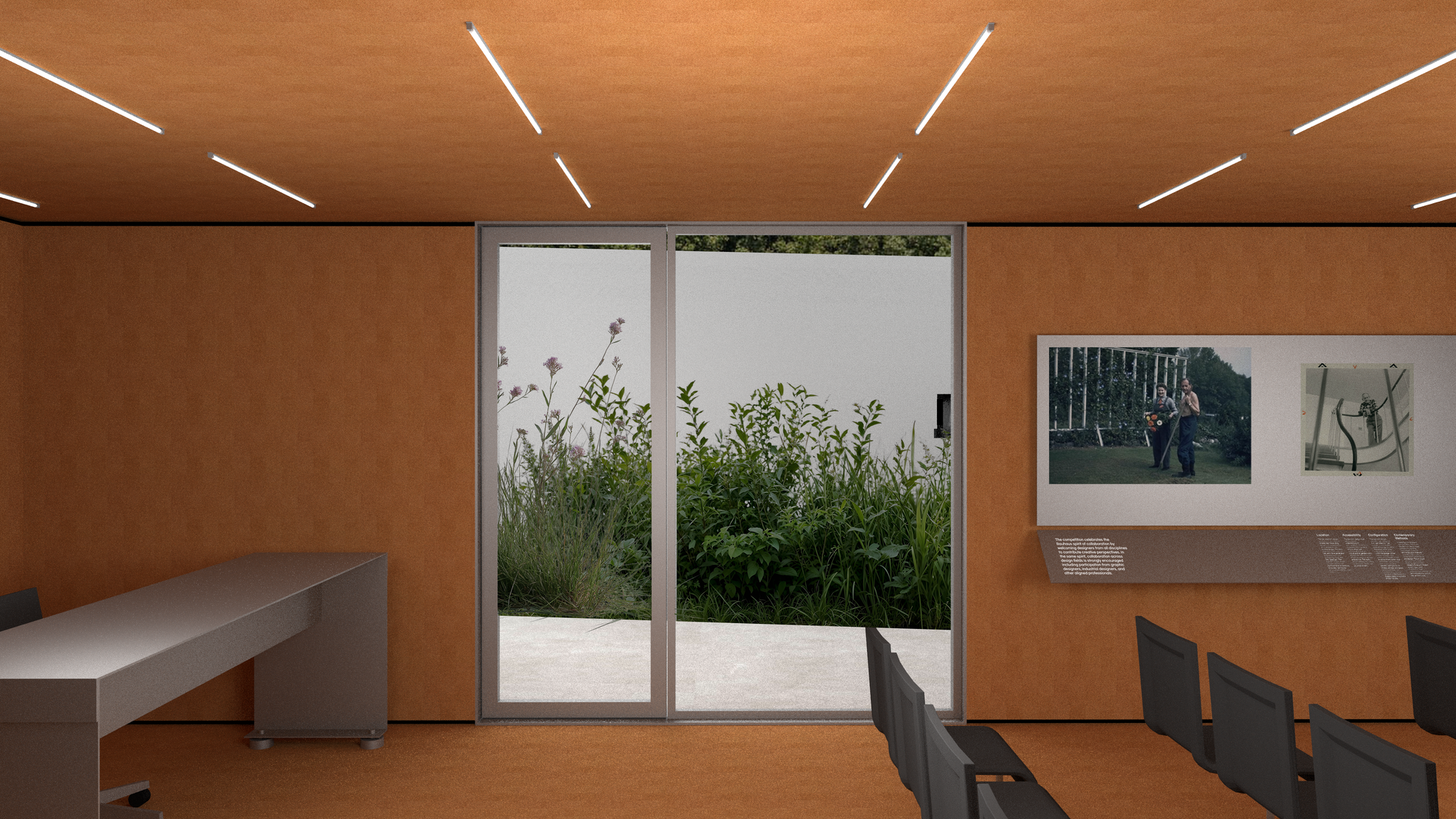
The exterior of the building is clad in stainless steel, emphasizing the unapologetically industrial inspiration of the Bauhaus. The interior surfaces of the visitor center are lined with cork, a sustainable material that also adds warmth to the palette. The bathrooms are finished in custom glazed tiles printed with imagery derived from Gropius’s work. The surrounding outdoor environment builds upon the existing pastoral landscape by creating an intensified native plant garden that envelops the new structure.
Overall, the proposal balances respect for the past with inspiration drawn from Gropius’s embrace of innovation and forward-looking design.
Project Team:
David Ruperti
David Clark Smith